

Dildar Ahmad
My Story
Being an early childhood orphan, Dildar Ahmad started earning his livelihood along with his studies right after his 9th class. As his mother had raised him with great expectations, he was all set to give her mother and his younger brother all the luxuries of life. All was going well, and he had new dreams as this was the last year of his graduation. Being a handworker and having unique ingenuity to handle the tough situations, he earned a good name in the books of his boss and was promoted to the level of next to him. Like every other day, he went to his work, and this day proved to be very hectic as he had to supervise his friend's work, as he was busy himself with his marriage. After days of tiredness, Dildar Ahmad returned to his boss's home, and it was time for prayer. As he was crossing the road as mosque was on the other side of the road, he met his friends and did the handshake one by one, but the last handshake turned out to be a life- changing accident as he fell when his friend pulled his hand in a joke.
He fell, twisting with such a loud cry that all the villagers rushed to the spot. No one had any idea what had happened, and no one would've idea of the fact that this was the beginning of the hardships of his life. His friends asked him to stand up, but he was perplexed and shocked, for not feeling his body below the ribs, though he could see the lower body being intact. He was rushed to the local hospital at Qazigund, where doctors had a good examination but referred him to SKIMS Srinagar. On the way at Pampore, the famous saffron town of Kashmir, he vomited, and this was all he knew of this unfortunate fifth day of September 1996. On the 7th day of the same month, he opened his eyes and found his dearest mother, brother, and boss, along with some other persons. Instantly, he was reminded of the accident the day before yesterday, but he could not understand what had really happened to his lower body, and he could not utter a single word when he saw a pipe inserted into his urinary bladder to drain out the urine, which he came to know afterwards was called a catheter
The period of Forty-five (45) days was so silent, like after the deadly storm the environment becomes . He had painful days there and lost all his money: when doctors could not decide what to do, the weak financial condition forced him to leave the hospital voluntarily. It was the period when Kashmir was highly turbulent, and there was no cone pt. of spinal cord injury, nor was there any rehabilitation center in Jammu and Kashmir.
Being at home for almost a week, he was taken to PGI Chandigarh, but it was all over. Dildar Ahmad was nothing but a live corpse, dejected, paralyzed, and demoralized. His daily routine was only to wait for tea, lunch, and dinner, and wait for death. He was thinking of his poor family condition and used to gaze at his mother and younger brother. Thankfully, being from a village, having a vegetable farm, and a hardworking mother, he used to get the food, but the financial condition used to worry him, and he was seeing a dark future for himself and his little family.
Days had changed, and the boss also never came to see him nor paid any amount when he had worked hard to flourish the business, and the agreed ten percent share was denied by his boss, which is no wonder in the corporate world. He was seeing the people whispering about his death, which never came. Years passed in waiting for this death, and in those years, Dildar went through tumultuous, pathetic, and undignified periods. Every new day brought a new challenge, and he had no idea where his life was going or where it would go. Also, he had no idea that there could be a dignified and meaningful life on wheelchair. It was just like adding days to life and had no idea of adding life to years. Hailing from a backward mountainous village, thinking of any support, moral or financial, was like finding a spring in a desert, though everybody was giving lessons and he used to hear without any reaction, but in the heart of hearts was drawing a map of his future life.
Dildar Ahmad says, "You need to be ready to learn, and rest is destiny. I accepted my disability, and LIFE BECAME MY BIGGEST TEACHER. After years of litigation, he got some amount from MACT and took a loan from Jammu and Kashmir Bank and started the business of transportation of public goods. The world had moved, and he was fascinated by visiting his school and the town of his office, as everything had changed. He says, it is so crucial and cardinal that every person with spinal cord injury (PwSCI) gets instant qualitative physical and psychological rehabilitation so that he does not waste the crucial time after injury to redefine and reorient his /her life." But his case was different for losing his career and business, and later on, his only motivation, guide, friend, and support the dearest mother.
Then he bought a modified bike from Indore Madhya Pradesh and he was so happy as now he too can go out to enjoy blue skies and nice cool breeze of his hilly village - But it proved to be a nightmare as it became his identity and the startling, peculiar, and strange looks of people made him feel that he has come from different world and is not part of this society. As the society created an inferiority complex in him, he sold that bike for half of the price he had bought, as a dream come true. This shocked him again, and there he began to think of an inclusive society. He began to think of the social acceptance of disabled people, especially severely disabled people, as Social Sympathy will lead disabled people nowhere. In the meantime, he suffered heavy losses due to the negligence of his driver as the inaccessible physical infrastructure was a big impediment in reaching everywhere regarding his business. He says this is why an accessible environment is necessary for the empowerment of Persons with spinal cord injury. As his financial condition consolidated, he bought a Santro car and used to go out and started looking for the PwSCI and find few of them being Aijaz Sahab, Khurshid sir, and Javid Sahab. There was the birth of his brainchild, which resulted in the formation of this organization named Concerned About Rehabilitation and Empowerment (CARE). The above three friends stood like a wall behind him, and he started compiling a database of such people in Jammu and Kashmir and coordinated them through a WhatsApp group named Valley wheelies.
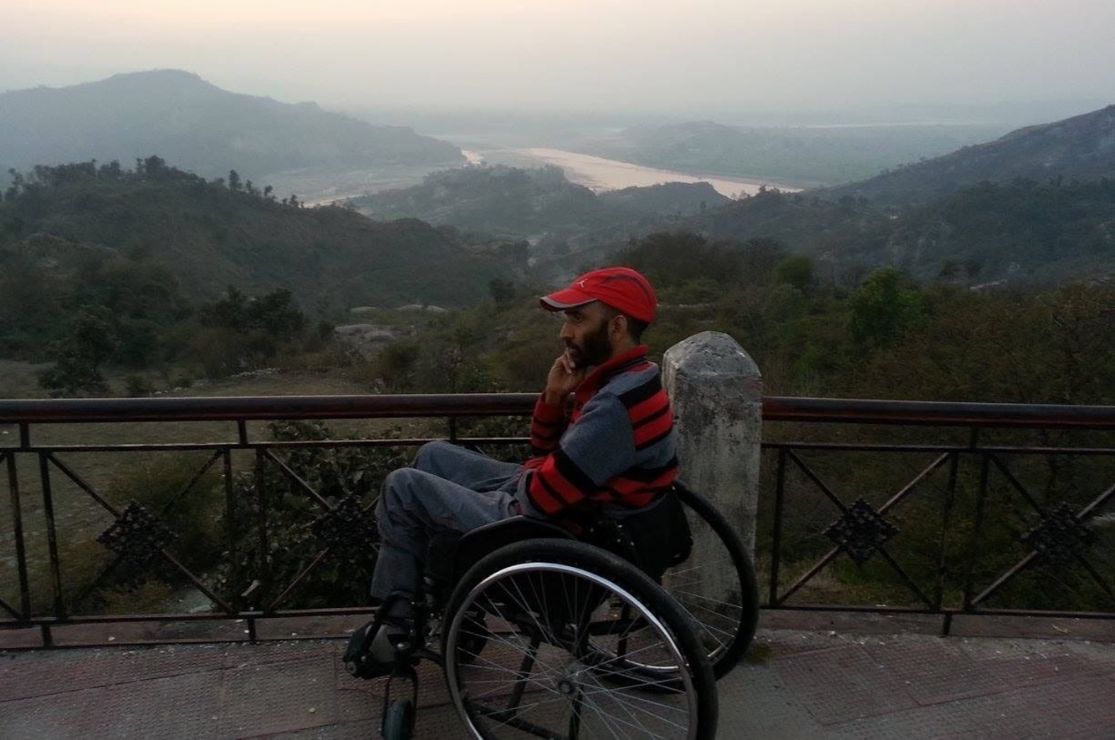
The paradigm shift in his life was when he read about car modification. His pleasure and hope are enhanced by leaps and bounds on reading; he can drive his own car. He wrote to the company in Pune, Maharashtra, and sent them the money in advance. He got his car modified, and his life changed. He used to go for hundreds of kilometers alone, which he never thought after the bad and pathetic days post spinal cord injury (SCI). Even though society created suspicions and apprehensions in the mind of his mother, he succeeded in defeating the taboos of society.
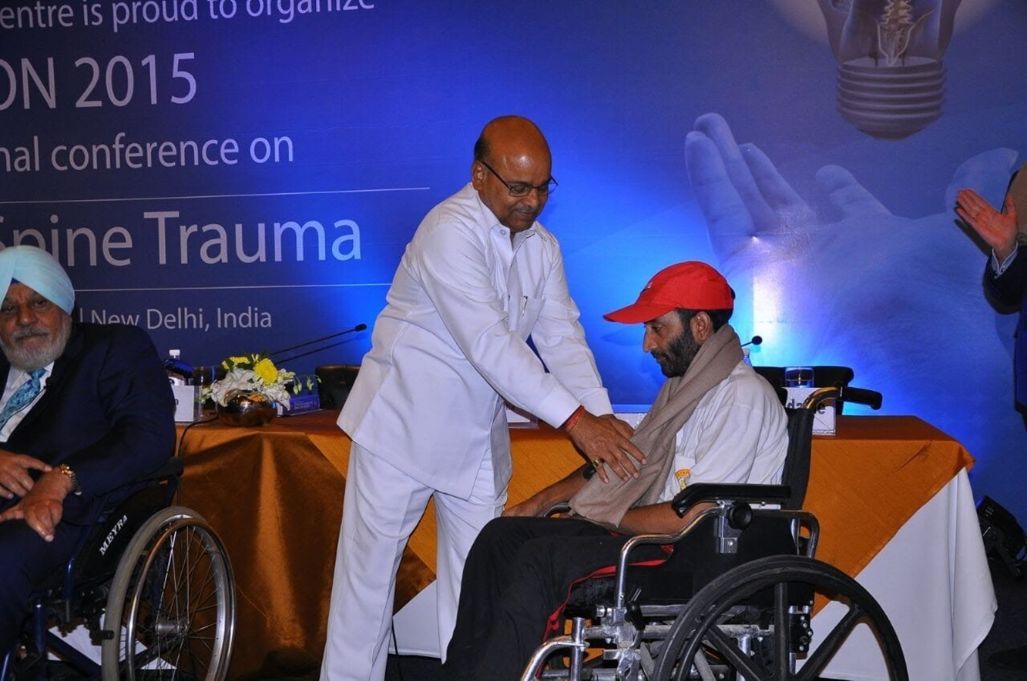
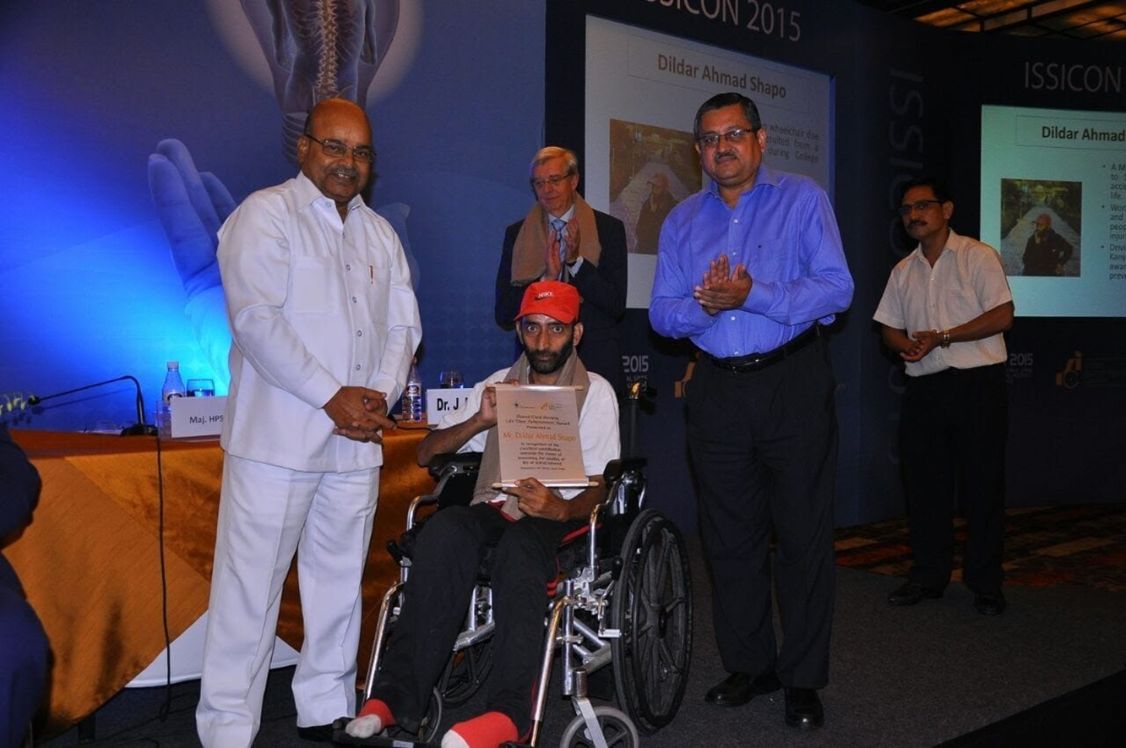
In 2015, he became the first PwSCI to do the all-India spinal cord injury awareness drive when he drove his modified car through the length and breadth of India, covering 24850 kms in 77 days. He got the award from the ISIC Delhi and spinal society of India, presented to him by the Hon'ble Union Minister of Social Justice and Empowerment. He was saddened to see the sufferings of the members of his fraternity and started working with spinal foundation and The Ganga Foundation (TGF).
Again, misfortune knocked on his door, he burnt his feet unknowingly, and the distal amputation of two toes was carried out, and it also took many months to heal after plastic surgery. As he was in the hospital alone despite the hospital being inaccessible, and doctors there applauded his grit, strength, and courage, but being absent from his business, he suffered another loss and had to sell his car to make up for it.
But he knew that wheelchair life has these disadvantages, and it sucks the person both physically and mentally. He rejuvenated his efforts and aim and restarted procuring free wheelchairs to the needy and involved his friends to give PwSCI money for generating means of livelihood and sending PwSCI outside Kashmir for the treatment of bedsores, and that too free.
COVID brought him individual problems, but he preferred to help PwSCI by involving friends and depositing money directly into their accounts, and with the help of Shafaqat Rehabilitation Centre an undertaking of Voluntary Medicare Society, an outstanding organization working for the rehabilitation of severely disabled in Jammu and Kashmir, distributed free ration kits at the door of PwSCI despite of restrictions on travelling. He says how spinal cord injury has sucked, devastated, dejected, dismantled, and destroyed his life journey again and again despite commendable strength, grit, fortitude, composure, and courage.
To increase the sphere and intensity of his work, this Foundation came into existence as day by day the number of PwSCI is increasing worryingly, and our social fabric and setup is transforming into nuclear families, and the care of PwSCI has become the biggest problem. The loneliness and being unattended remind him of his own days of suffering, and efforts are made to save PwSCI from the ordeal, agony, and affliction through which Dildar Ahmad went. He lost his career, business, mother, and, in fact, everything due to this lifelong sucking disability known as spinal cord injury.