

Spinal Cord Injury
It is an injury to the spinal cord that results in complete or incomplete, and permanent loss of motor, sensory, and other autonomous activities. Spinal cord injury affects the muscles involved in the locomotory and sensory function below the level of injury. Even though the spinal cord works normally above the injury but at the level of injury the messages/impulse is either blocked or allowed partially from being transmitted from brain to different parts of the body below the level of injury making the injury as complete or incomplete and thus a person with spinal cord injury (PwSCI) becomes paraplegic or Quadriplegic and losses the control of bowels and urine and also suffers from some other associated problems like pressure or bedsores, spasms, contractures and in the cases with higher level of injury breathing problems as well. In the upper cases of spinal cord injury, the dangerous fluctuations in blood pressure can result in the death of individuals if not treated in time. Therefore, spinal cord injury is a sum of disabilities within the disability of an individual. On one hand, the injury cannot be reversed, and on the other hand, the associated problems of this injury make the life of an individual tough, embarrassing, and dependent, and most of the time is spent taking care of these associated problems, leaving very little time to work on a wheelchair to carry out the daily chores of life.
Thoracic Spine
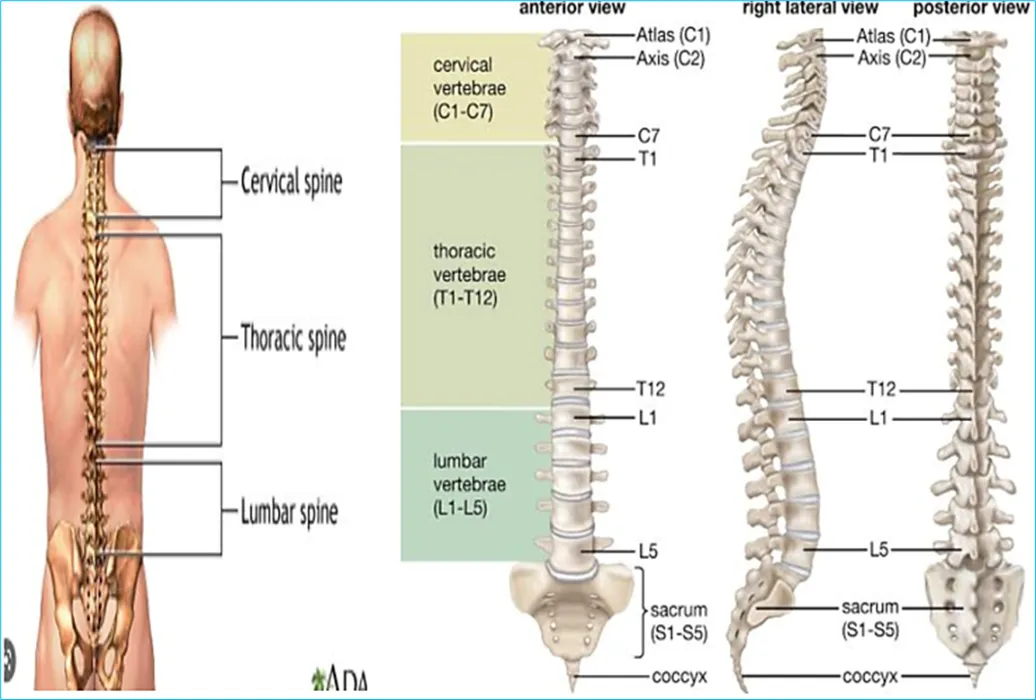
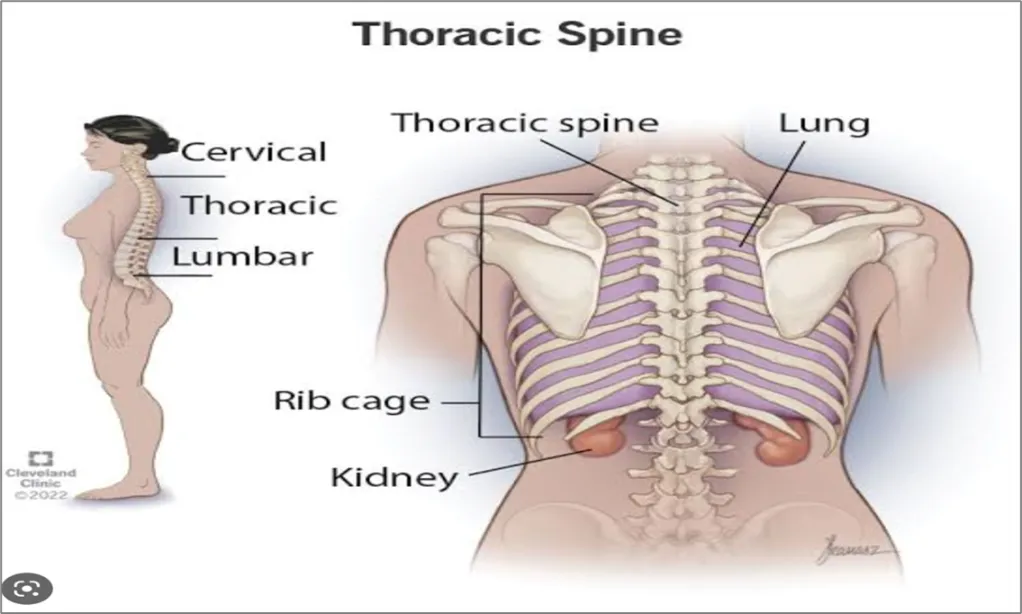
Spinal cord injury can result in paraplegia, meaning the loss of locomotory and neuromuscular power below the thoracic level, or Quadriplegia which is caused by an injury to the spinal cord in the cervical area. In layman's language, paraplegia means when the legs lose power, and Quadriplegia means when both arms and legs lose power. There are some cases whose injury level is in the upper cervical area, and they have only a little movement in the neck, and the rest of the body becomes non- functional, and the term tetraplegia is used in those cases. The degree of injury to the spinal cord makes an injury complete or incomplete in nature. If an individual has partial sensation and movement below the injury, it is called an incomplete injury, and in the case of total loss (like in the transaction of the spinal cord), the injury is known as a complete injury. The other mechanism of evaluating this injury is ASIA.
Sections of Spinal Cord
The four sections of the spinal cord are (i) Cervical, (ii) Thoracic, (iii) Lumbar, and the fourth Sacral, denoted by the first alphabet like C, T, L, and S respectively. An infection or a disease and surgery of spinal tumours also can result in the Spinal cord injury and in all above cases an individual is rendered to a four wheel chair called wheelchair. The spinal cord has 31 pairs of spinal nerves exiting the spinal column, with each spinal nerve having two roots, a front (anterior) motor root and a back (posterior) sensory root. The first spinal nerve, however, has no sensory root. The front or anterior root carries signals from the spinal cord to muscles to initiate muscle movement, and the sensory root in the back is responsible for carrying information related to touch, position, pain, and temperature from the body to the spinal cord.
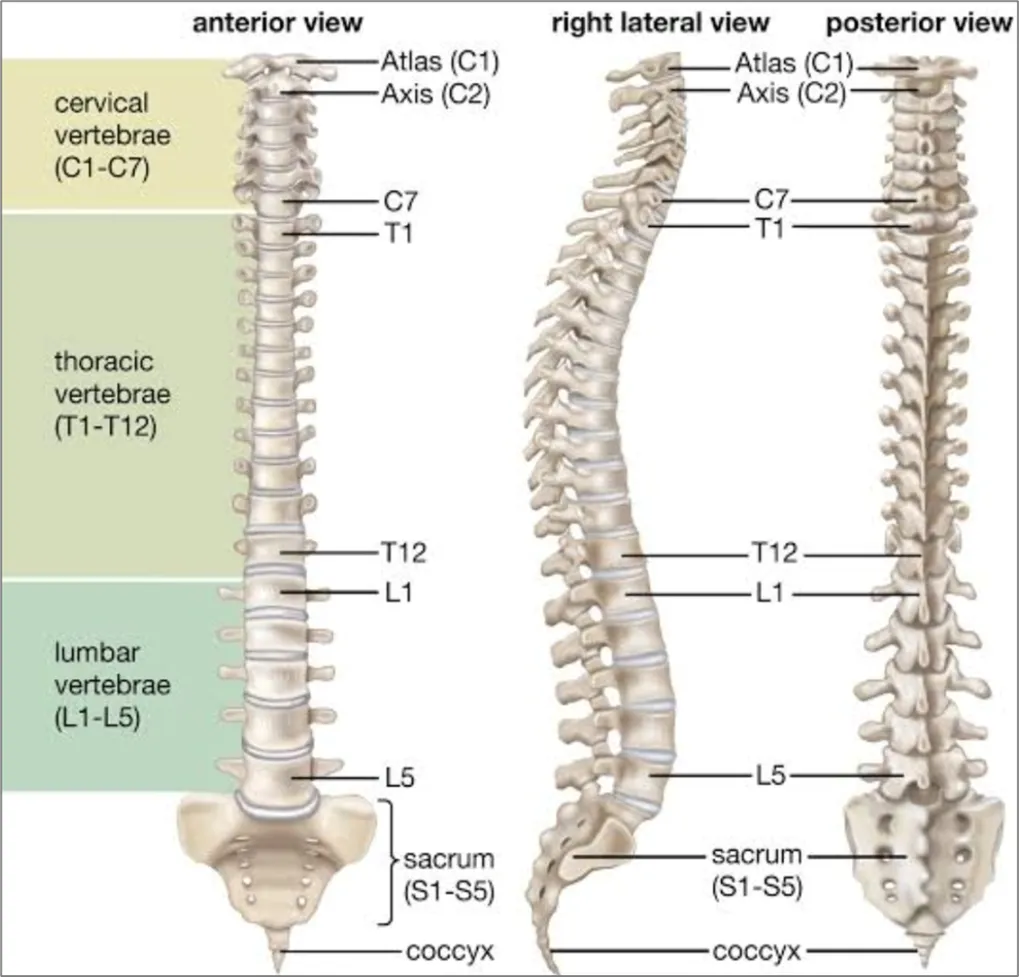
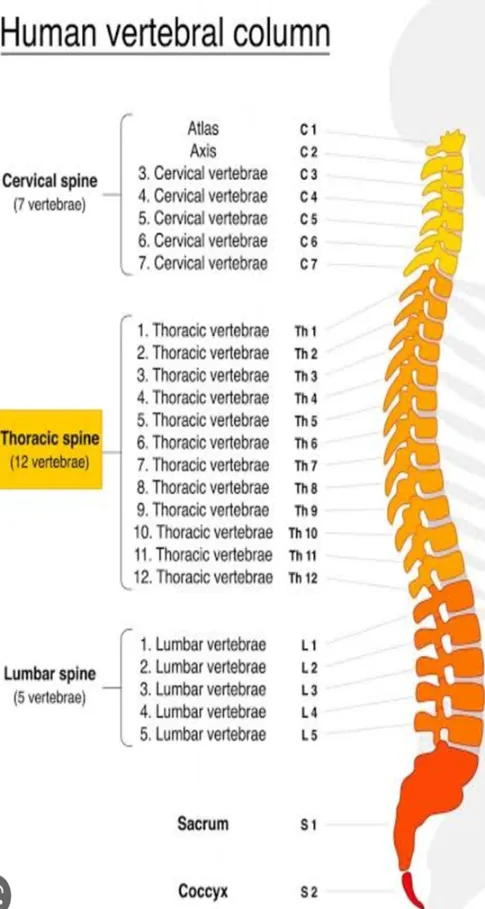
Both the level of the injury and the type of injury (incomplete or complete) will usually determine the extent of injury. As every spinal cord injury is unique in nature, complications also differ from one individual to another. The higher the level of injury, the less function that will be retained. Lower extremity functions such as walking, running, and climbing are almost always impaired or completely lost after injury at any cord level. A number of complications will arise that are related to not being able to stand and/or walk. In most of the individuals SCI results in atrophy (the loss of muscle bulk) as well as osteoporosis (decrease in bone density) therefore making an individual vulnerable to fractures and problems of temperature regulations The inability to stand pressurizes the muscles at pressure points like buttocks, thighs, knees and heel and changing of positions becomes imperative and any delay hampers the blood supply to such parts resulting in the wounds called pressure or bedsores. Due to the loss of skin sensation below the level of injury, the PwSCI does not feel the painful levels of hot or cold and thus immense preventive measures are needed to save these persons from serious burns, bruises, and cuts, failing which the PwSCI is entangled with a pool of problems. Therefore, a Quadriplegic totally depends upon a permanent caretaker, and a paraplegic only needs help at the time of transfers from bed to wheelchair, to commode to car, and vice versa, though there are cases that are completely independent where there's an accessible and wheelchair friendly physical infrastructure. The complications in blood circulation may range from low blood pressure to swelling of the extremities, creating higher-risk situations for developing blood clots. A life threatening circulation complication for SCI is a rise in blood pressure known as autonomic dysreflexia or autonomic hyperreflexia. Therefore, a PwSCI has a huge number of problems of Urinary Bladder, Bowel evacuation, Respiration, stimulation, Skin Infection and Skin dryness, Bones and joints, Sexual impotence, Curvature and Posture of vertebral column and body, Temperature Regulation, Digestion, Perspiration, and Mood Fluctuations. Apart from injury to the Spinal cord, disorders or diseases can cause permanent, irreparable, and irreversible problems, and often the result is the same as SCI, and the person comes to a wheelchair and needs an full time care taker. Some of the common spinal cord disorders are Amyotrophic Lateral Sclerosis (ALS), Multiple Sclerosis (MS), Post-Polio, Transverse Myelitis, Spina Bifida, and Syringomyelia.